
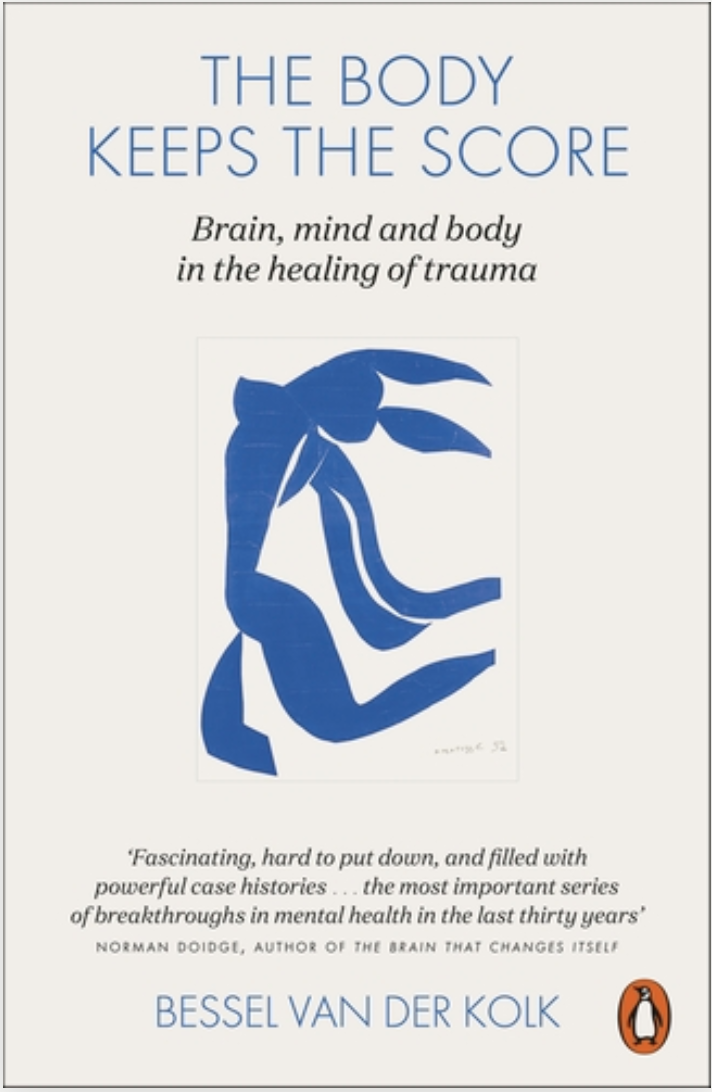
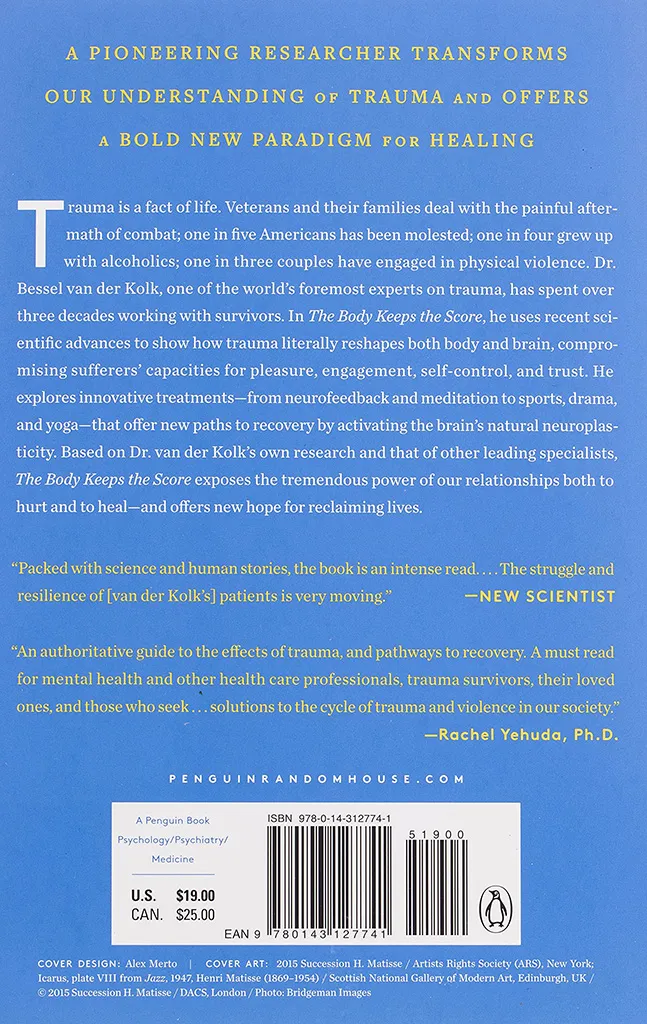
There are few books as groundbreaking and validating as The Body Keeps the Score. Drawing on decades of research and clinical practice, Dr. Bessel van der Kolk helps us understand how trauma reshapes not only our memories, but our bodies, brains, and capacity to feel safe in the world. What makes this work so compelling is how it blends science with story — offering not just explanations, but a map for healing.
Van der Kolk explores how traumatic experiences — whether big or small, single incidents or ongoing neglect — imprint themselves in our physiology. When trauma remains unresolved, it lodges itself in the nervous system. The result? We may react with hypervigilance, dissociation, emotional numbing, or chronic pain. We might not remember the trauma clearly, but our body does.
What touched me most was the book’s message that trauma survivors are not broken — they are wounded. And those wounds need tending not just through words, but through the body itself: movement, breath, touch, rhythm, and safe connection. It validated the idea that healing isn’t linear — it’s layered, embodied, and deeply relational.
Key Takeaways
- Trauma isn’t just in the mind — it lives in the body.
Flashbacks, anxiety, numbness, and chronic illness can be physical manifestations of unhealed trauma. - Survival responses are not character flaws.
Behaviours like shutting down, people-pleasing, or anger are often adaptations to past unsafe environments. - Talk therapy isn’t always enough.
True healing often requires somatic (body-based) practices like yoga, EMDR, neurofeedback, or breathwork to help rewire the nervous system. - Safety is foundational.
Trauma is, at its core, a rupture in safety. Healing begins when we feel safe enough to feel. - Relationships heal.
Secure, nurturing relationships — whether with therapists, friends, or communities — are vital to re-learning trust and connection. - The body is a source of wisdom.
Practices that reconnect us with our physical selves (dance, drumming, movement) aren’t “extras” — they’re essential to healing. - We are more than our trauma.
While trauma may shape our story, it doesn’t define who we are. The book encourages a shift from surviving to thriving — by reclaiming our bodies, our breath, and our voice.
Reading The Body Keeps the Score felt like finding language for things I had only ever felt. It brought a deep sense of compassion — not only for myself but for others who carry unseen pain. It reminded me that what we call “difficult” people are often simply hurt people, doing their best with the tools they had. This book has shaped the heart of what I hope to share through the Soulful Café — that healing is possible, that our bodies can be trusted again, and that our stories deserve to be told, felt, and transformed.
0 comments